Trim the fat. Smoke some herbs. And carry a meat thermometer. These are among the tips that will assure you of safe and tasty grilling this Australian summer. Here’s your BBQ safety checklist.
New to Australia? Outdoor BBQs are a big part of everyday life here, especially in parks, beaches, and shared housing. Safety rules are taken seriously due to heat and fire risk.
BBQ Handling Safety
Whether you’re stoking charcoal at the beach or manning a state-of-the-art gas BBQ in your own backyard, safety comes first. So says Nancy Hughes, Weber’s oracle of grilling knowledge for the past 35 years. Her tips include:
- Always place the barbeque at least 3 metres away from a structure or other combustible surface. In Australia, this distance is especially important during summer when fire danger ratings can be high and total fire bans may apply.
- Be sure to place your BBQ on a flat, level surface so it won’t tip.
- Never light a gas-fired BBQ with the lid closed.
- After reattaching a gas tank, always check for leaks by brushing a soapy solution onto the connections. If you see bubbling at a connection, be sure to tighten the connection before you ignite the grill.
- Charcoal grills should never be used indoors, even if ventilation is provided. Since charcoal produces carbon monoxide fumes, do not store the BBQ indoors either. Some international students come from places where indoor charcoal cooking is common, but in Australia this is strictly outdoor use only.
“Keep children and pets away from a hot grill,” emphasises Ms Hughes. She suggests placing the BBQ away from traffic patterns and using outdoor furniture to block off the area around the flame. And always, she adds, read the owner’s manual before operating a new BBQ.
Food Handling Safety
Thousands of people every summer wind up in emergency rooms with food poisoning from eating improperly handled, cooked or stored food. Australia has strict food safety expectations, especially in shared housing and public BBQ areas, so basic hygiene matters. Never, says Ms Hughes, use the same plate to bring the food to and from the BBQ.
If you’re using a sauce or marinade, she says, pour it in a separate container before you apply it to the food. And don’t reuse the marinade.
Most BBQ food poisoning comes from bacteria on raw meat (especially poultry and minced meats) spreading to hands, benches, utensils, and ready-to-eat foods. Avoid rinsing or washing raw chicken, since splashes can spread contamination around the sink and prep area; focus on separation, cleaning, and thorough cooking instead. For public-health guidance, see NSW Food Authority advice.
The Dietetic Association recommends these four simple tips for hygienic, illness-free barbequing:
- Wash your hands thoroughly after handling uncooked foods.
- Keep raw meats and ready-to-eat foods separate.
- Refrigerate meat and other perishables to 4 degrees or colder.
- Cook foods to the proper temperature. Hamburgers should be cooked to 66 degrees, chicken to 77 degrees, and beef, veal or lamb to 63.
Achieving Safe Cooking Temperatures
A food thermometer is the only way to be certain meat is thoroughly cooked, says Ms Hughes. It should be as much a part of your outdoor BBQ kit as your long-handled tongs and a timer, she adds.
If you don’t have a food thermometer handy, visual cues can be misleading and should not be relied on for food safety, especially for poultry and minced meats.
- For beef patties, rissoles and sausages, check to see that only the very center is light pink.
- For chicken, make a cut with a small, sharp knife. The flesh should be opaque all the way to the bone with no sign of pinkness.
- Use a fork to prod fish. When it’s done, it will be firm and on the verge of flaking.
Food should never sit unrefrigerated for more than two hours. If the outdoor temperature is above 32 degrees, shorten that interval to one hour. In an Australian summer, heat can spoil food quickly, so coolers or eskies are commonly used to keep food safe outdoors.
Mayonnaise often gets the rap in food-poisoning cases, but many times it’s an ingredient in the salad that’s the real culprit. Tuna, pasta, potatoes and eggs all need to be refrigerated before being mixed into a salad. This prevents bacteria from possibly being introduced into the finished product
BBQ Technique
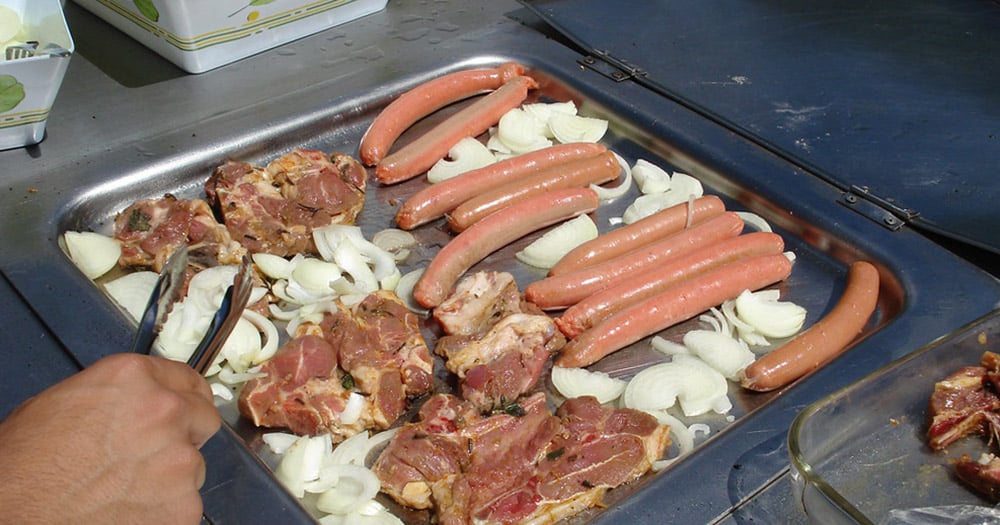
Flare-ups not only are dangerous but the fastest way to ruin a BBQ meal. Remember, you want to sear the food, not burn it. To prevent flare-ups, remove excess fat from meats and shake off extra marinade.
Don’t overcrowd the BBQ plate or grill. Overcrowding causes your food to steam, not sear. And refrain from poking and turning. “A lot of guys think that grilling means turning everything 40 times,” says celebrity chef Bobby Flay and contributor the FoodTV.com. “I use really high heat, turn it once and let a nice crust form. It sears in the flavor and keeps food from sticking.” Brushing oil onto the metal plate also helps to keep food from sticking.
If you’re someone who likes the intensely smoky flavour, Ms Hughes recommends adding wood chips from trees such as Oakwood, Jarrah and Ironbark. Start by soaking the chips in water for 45 minutes before wrapping them in aluminum foil. Puncture the foil to let the smoke escape. Place the bundle on the hottest part of your BBQ — but never directly above the flames.
Herbs can be used in a similar way to add scent and flavor to an entree, especially seafood. Simply soak and drain dried or fresh herbs such as rosemary, thyme, sage and tarragon, and sprinkle them directly on the coals just before cooking.